112 Founders Drive Baton Rouge, LA 70810 | 225-756-0222
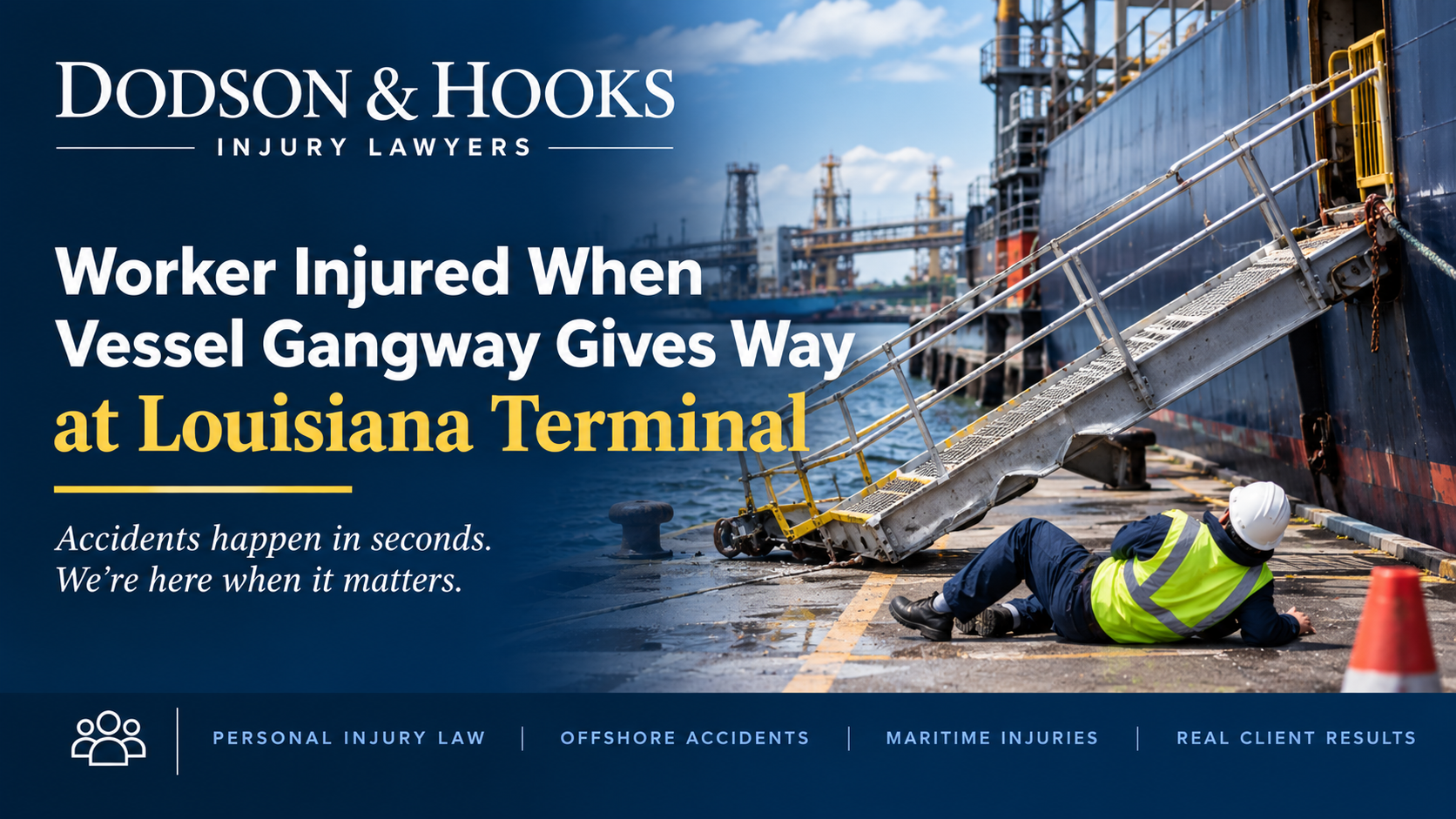
Worker Injured When Vessel Gangway Gives Way at Louisiana Terminal

Gangways are the connection between a vessel and shore. When a gangway shifts, collapses, separates or is improperly secured, a routine boarding operation can result in a serious maritime injury.
A federal case arising from an accident in Louisiana illustrates the legal issues that can follow a gangway accident.
In Cockburn v. Apex Oil Co., a petrochemical inspector was working in connection with the M/V SAN ROBERTOat a facility in Mount Airy, Louisiana. He alleged that he was injured when the vessel’s gangway gave way.
The resulting litigation involved maritime negligence, the Longshore and Harbor Workers’ Compensation Act, Section 905(b) vessel-negligence principles, Louisiana claims, expert testimony and preservation of evidence.
Who Is Responsible for a Vessel Gangway?
That question does not always have a simple answer.
Responsibility may depend upon who owned the vessel, who supplied the gangway, who positioned it, who inspected it and whether vessel or terminal personnel knew—or should have known—about a dangerous condition.
For workers covered by the LHWCA, claims against a vessel can also implicate Section 905(b).
A vessel’s duties to longshore and harbor workers are different from an employer’s workers’ compensation obligations. Determining whether a vessel breached one of those duties requires a careful examination of the circumstances surrounding the accident.
Evidence Preservation After a Gangway Accident
One particularly important issue in serious maritime cases is preservation of evidence.
After an accident, the physical condition of a gangway can change quickly. The vessel may leave Louisiana. Equipment may be repaired. Surveillance recordings can be overwritten. Crew members may disperse around the world.
Potentially important evidence can include:
- photographs and video of the gangway;
- terminal surveillance footage;
- vessel CCTV;
- inspection and maintenance records;
- deck logs;
- incident reports;
- witness statements;
- measurements of the gangway and landing area;
- safety policies; and
- communications between vessel and terminal personnel.
When evidence is lost after litigation should reasonably have been anticipated, courts may be asked to addressspoliation of evidence.
The Cockburn litigation included a dispute involving preservation of evidence, demonstrating why early investigation can be particularly important in maritime injury cases.
Medical and Future-Care Evidence
Serious maritime injury cases are not limited to proving how an accident occurred.
The injured person’s medical condition, ability to work and future medical needs can be equally important.
The Cockburn litigation included issues concerning medical and expert testimony, including an orthopedic physician, life-care evidence and safety opinions.
In a catastrophic injury case, a properly developed damages claim may consider past and future medical treatment, lost wages, diminished earning capacity, physical limitations and other damages allowed under the applicable maritime law.
Louisiana Maritime Accidents Can Involve Several Bodies of Law
An injury occurring at a Louisiana dock does not necessarily mean ordinary Louisiana negligence law controls every issue.
Depending upon the worker, vessel and location, the case may involve:
General maritime law. Federal maritime principles govern many accidents involving vessels and navigable waters.
The LHWCA. Longshoremen, harbor workers and certain other maritime employees may receive benefits under the Longshore and Harbor Workers’ Compensation Act.
Section 905(b). An LHWCA-covered employee may have a separate negligence claim against a vessel under appropriate circumstances.
Louisiana law. State law can remain relevant to particular parties or issues, depending upon the circumstances.
Identifying the correct legal framework can materially affect the claims available to an injured worker.
Investigating Louisiana Gangway Injuries
When a worker is seriously injured on a vessel gangway, counsel should investigate the vessel and shore sides of the accident.
Questions may include who deployed the gangway, whether it was properly secured, whether the tide or vessel movement affected it, when it was last inspected, whether similar problems had occurred, and which company had responsibility for correcting the condition.
That investigation can reveal potential defendants beyond the injured worker’s immediate employer.
Louisiana Maritime Injury Lawyers
Dodson & Hooks represents individuals injured in maritime, offshore and industrial accidents and works with referring lawyers on significant maritime cases.
A vessel gangway accident can implicate federal maritime law, the LHWCA, vessel negligence and Louisiana law. Early identification and preservation of evidence can be critical.
Case discussed: Cockburn v. Apex Oil Co., No. 2:22-cv-2058 (E.D. La. 2026).
This article is for informational purposes and discusses issues raised in a reported case. The existence and value of any maritime injury claim depend upon its individual facts.